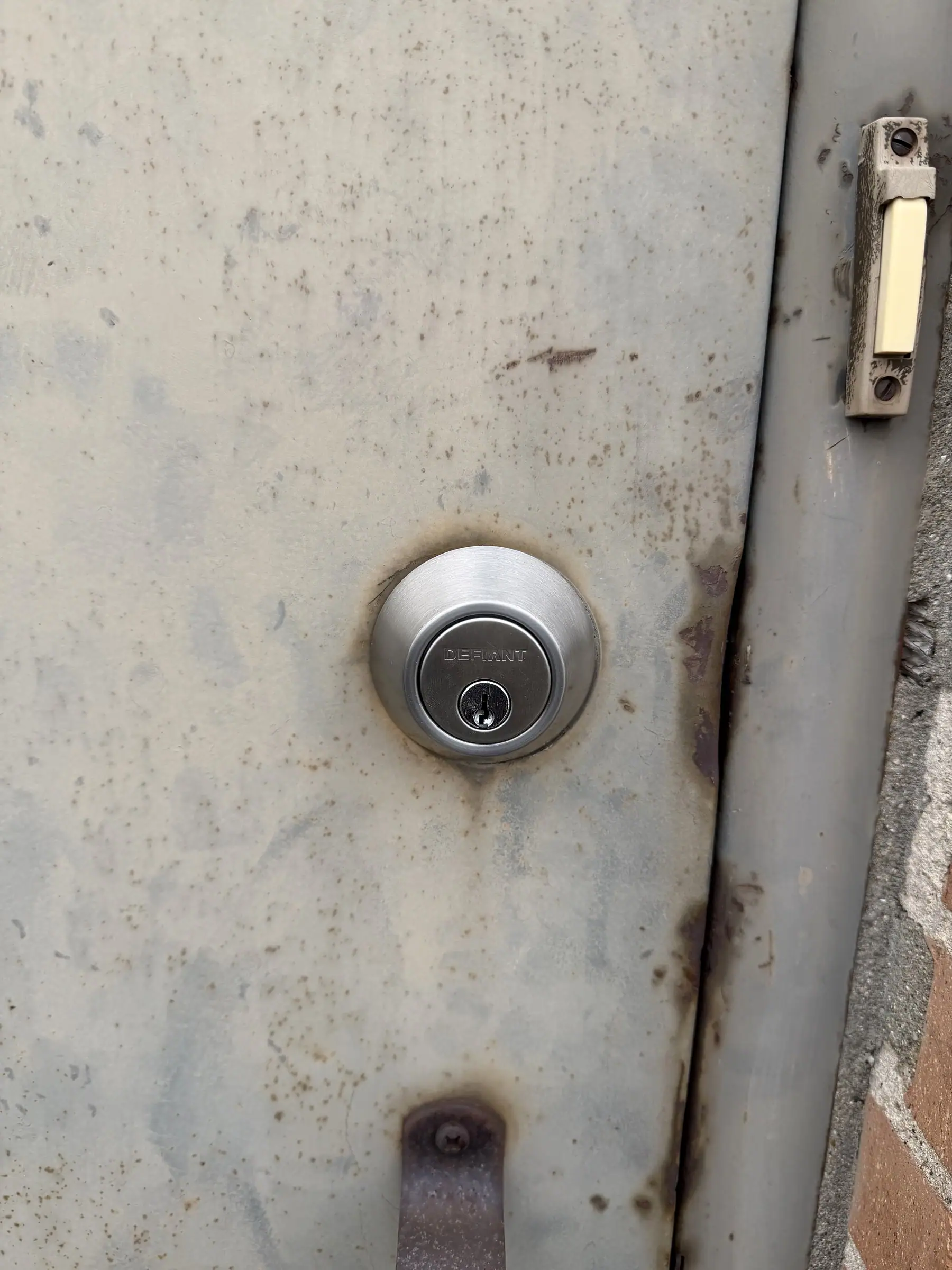
Deadbolt installation for Cleveland homes and businesses
A deadbolt is the lock that keeps a door shut. We install new ones, replace worn ones, and set the strike so it holds.
Why a knob lock isn’t enough
The lock in a doorknob or lever holds the door with a spring latch, a beveled bolt that slides back when the door is pushed closed. It is made to keep a door shut, not to stop someone forcing it. A credit card or a firm shove can get past many of them.
A deadbolt has a solid bolt that only moves when the key or thumb turn moves it. It can't be pushed back from outside, and a good one reaches deep into the door frame. Every exterior door, including the one from the garage into the house, should have one.
What makes a deadbolt hold
- The throw. The bolt should extend a full inch into the frame. Short-throw bolts are easier to pry.
- The strike plate. This is where most kicked doors fail. A standard strike is held by short screws in the soft wood of the jamb. A reinforced strike with long screws that reach the wall framing behind it is what holds when the door is kicked.
- The grade. Deadbolts are graded by ANSI and the BHMA: Grade 1 is the strongest, Grade 2 is a solid choice for homes, and Grade 3 is the lightest.
- The door. A hollow-core door or a weak frame limits what any lock can do. If yours is one, we tell you.
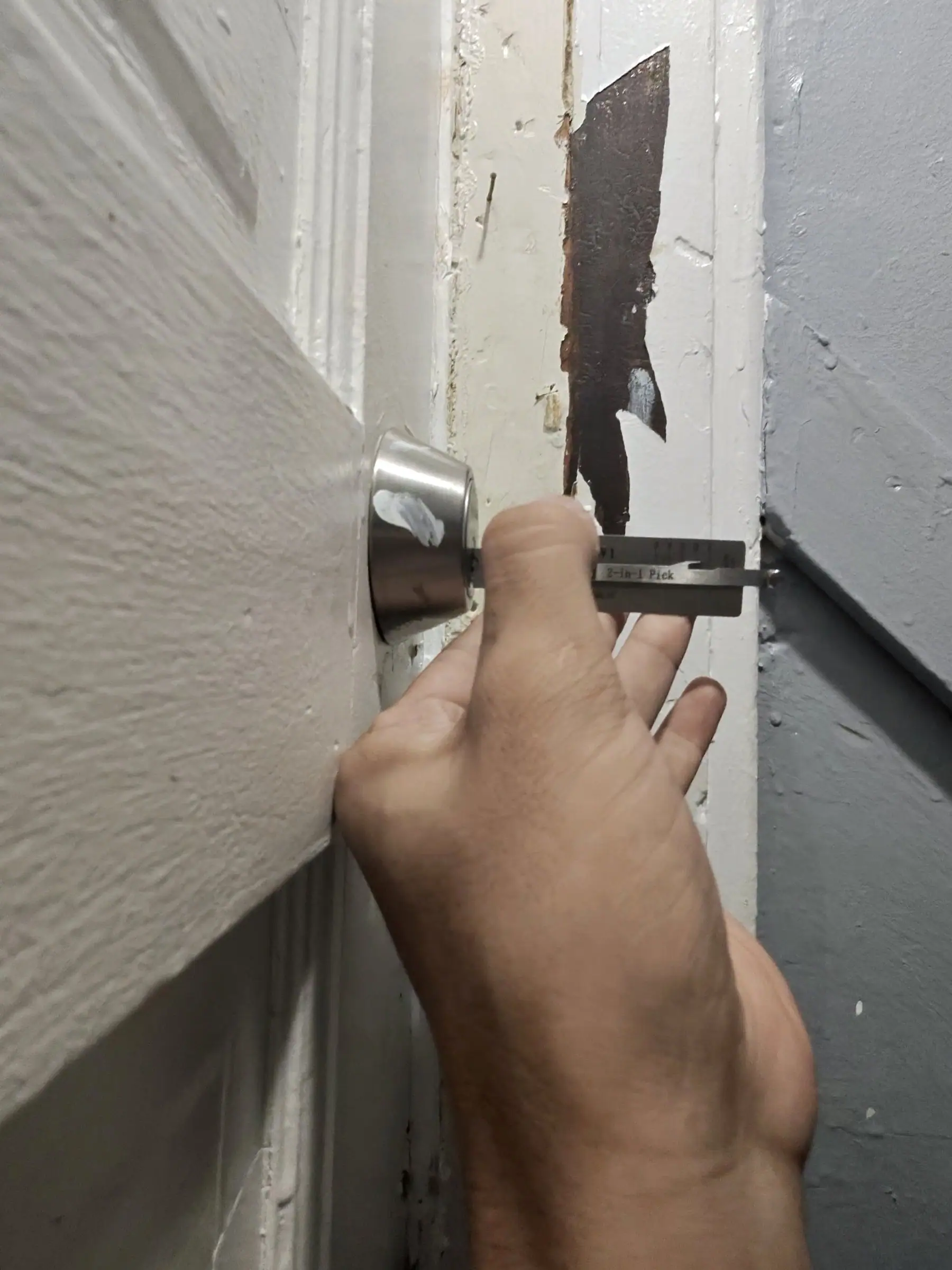
Single cylinder, double cylinder or keypad
A single-cylinder deadbolt has a keyhole outside and a thumb turn inside. It is the standard for most homes because you can get out fast in a fire without hunting for a key.
A double-cylinder deadbolt needs a key on both sides. It is sometimes used on doors with glass next to the lock, so a burglar can't break the glass and reach the thumb turn. The trade-off is getting out in an emergency: the key has to be in the lock or right beside the door whenever someone is home. Check your local fire and building rules and talk it through with us before choosing one.
Keypad deadbolts open with a code, and some also have a keyhole as a backup. They are handy for families, rentals and anyone tired of hiding a spare. If you are buying one yourself, keep the box and the receipt until it is installed, since some need a particular door thickness or backset.
Adding a deadbolt to a door that never had one
Many older doors in Cleveland and its suburbs have a knob and nothing else. Adding a deadbolt means boring a hole through the door face, a smaller hole into the edge for the bolt, and a pocket in the frame for the strike. Placed right, the deadbolt sits above the knob, the bolt lines up with the strike, and the door closes without anyone having to lean on it.
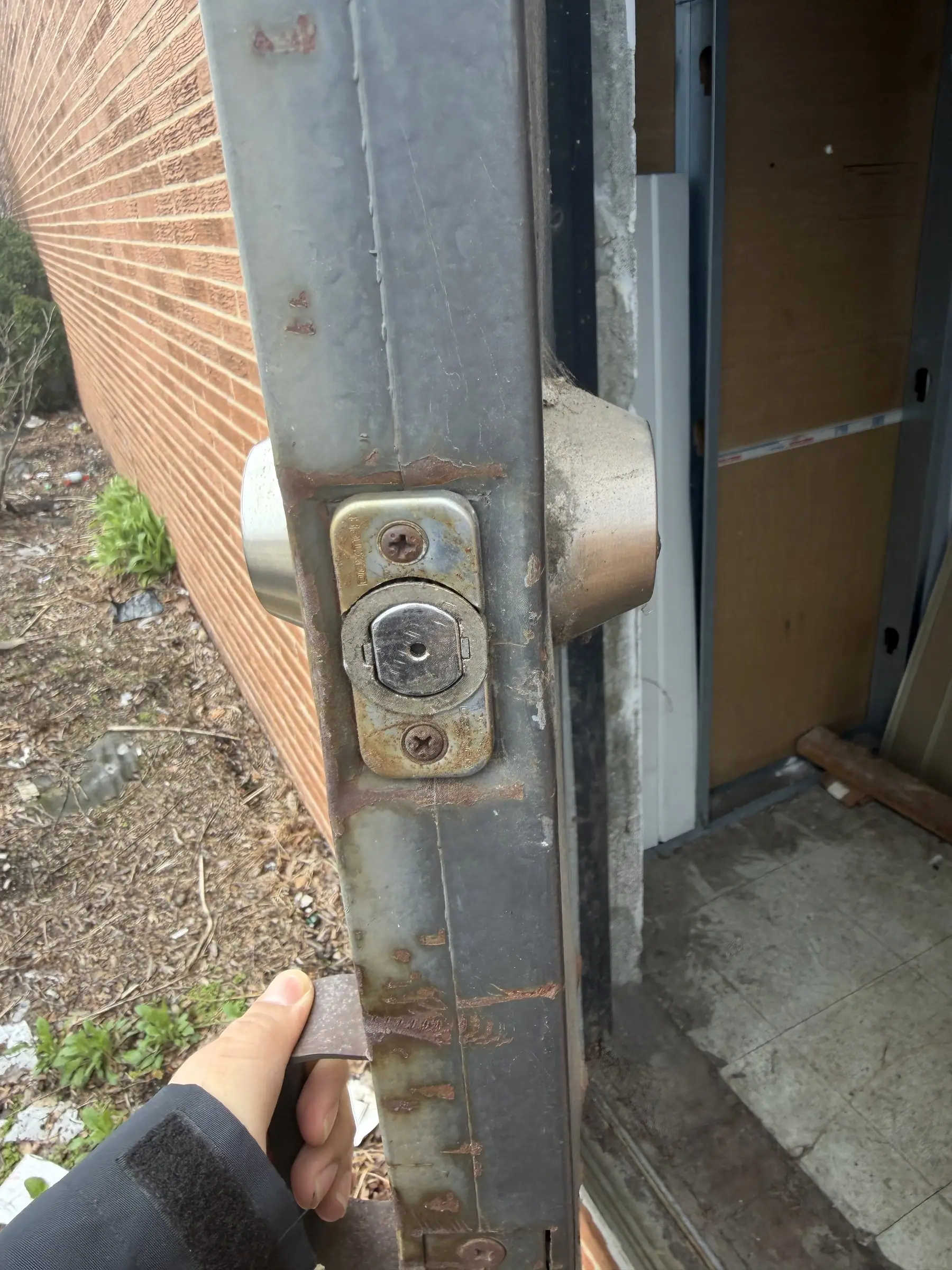
On steel doors like the ones in the photos on this page, common on back doors and businesses, the work is the same but slower, and the frame is often steel too. That is where a proper commercial deadbolt is worth the extra.
When a deadbolt sticks
A deadbolt that only locks when you push or pull the door is fighting a strike that is out of line, usually because the door sagged or the house moved with the seasons. Cleveland's freeze and thaw does that to doors every year. Adjusting the strike, not replacing the lock, is often the fix.
If the key is what sticks, the cylinder may be dirty, frozen or worn. A dry graphite or a lock lubricant made for the job helps; oil in a lock gathers grit and makes it worse over time. If the lock is worn out, a new deadbolt or a rekey with new pins is the fix.
What this covers
- New deadbolts on any door
- Worn deadbolts replaced
- Reinforced strike plates
- Single and double cylinder
- Keypad deadbolts
- Keyed to match your other locks
How it goes, start to finish.
Call or text
Tell us what you need and how many doors. You get a free estimate before anything is booked.
We come to you
Mobile service across Greater Cleveland, with locks, cylinders and pins on hand.
Price agreed first
You hear the price and agree to it before any lock comes apart.
Done and tested
Every key tried in every lock it should open, and the door checked that it closes and latches.
What decides the price of a deadbolt
Estimates are free and you hear the price before work starts. What moves it:
- The deadbolt. Grade, brand and type, or one you supply.
- The door. Replacing an existing deadbolt is quicker than boring a new one into wood or steel.
- The strike. A reinforced strike and longer screws add a little and do the most good.
- Keying. Matching it to your other locks, if they share a keyway.
Deadbolt Installation questions.
Can you add a deadbolt to a door that doesn’t have one?
Yes. The door and frame are bored for the bolt and strike, lined up so the door closes without force.
What is the best deadbolt for a home?
A Grade 1 or 2 single-cylinder deadbolt with a full one-inch throw and a reinforced strike held by long screws.
Should I get a double-cylinder deadbolt?
Only where the safety trade-off makes sense, since you need a key to get out. Talk it through with us and check local rules first.
Can you install a keypad deadbolt I bought?
Yes. Keep the box and receipt until it is fitted, in case it doesn’t suit the door.
Why does my deadbolt only lock if I push the door?
The strike is out of line with the bolt, usually because the door sagged. Adjusting the strike usually fixes it.
Other work we do.
See every service, or go back to the Evo Locksmith home page.
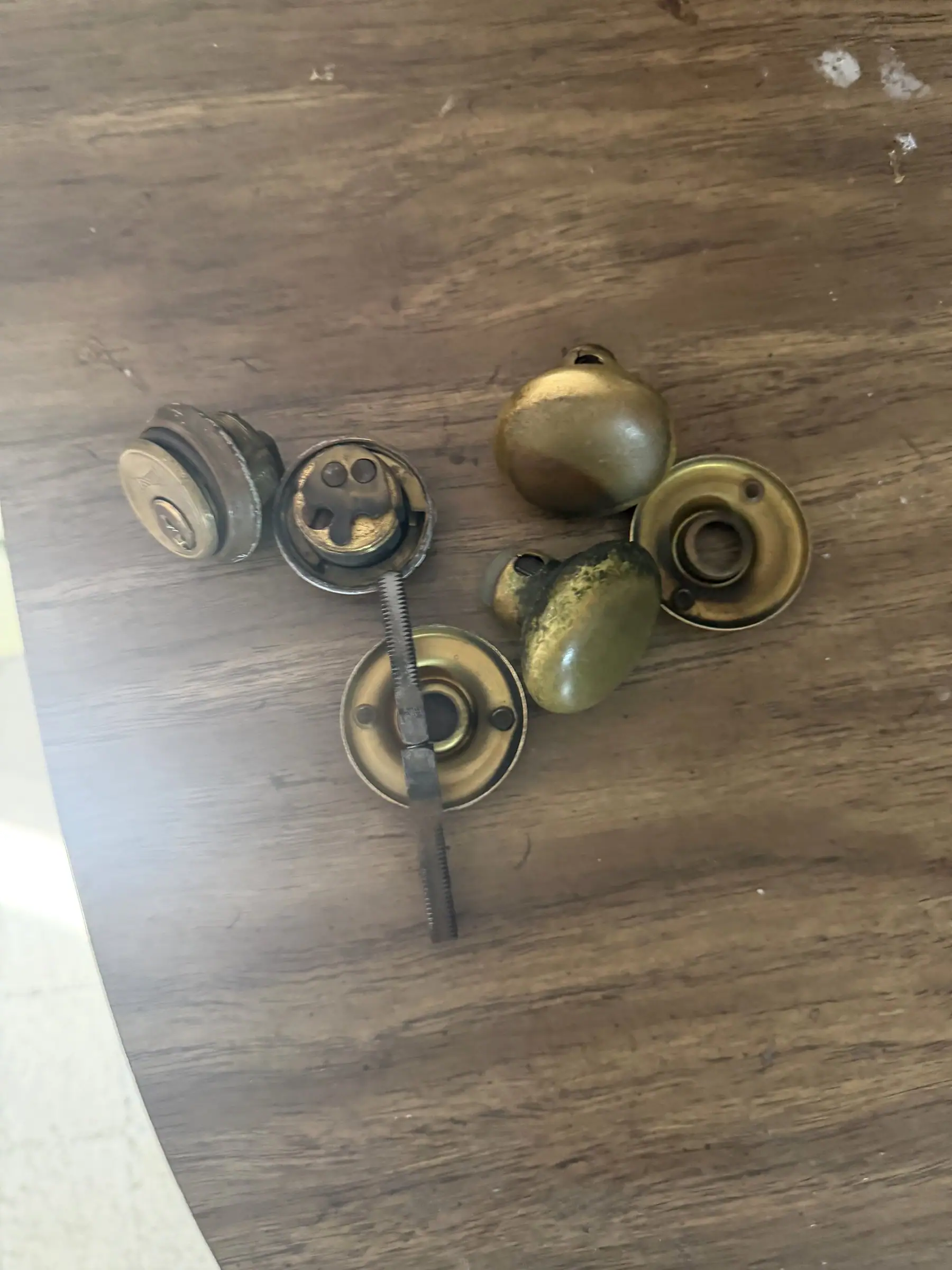
Lock Installation and Replacement
New locks on new doors, worn or broken locks swapped, and a stronger lock where you need one.
Learn more
Lock Rekeying
Old keys stop working, your locks stay. For new homes, lost keys and tenant turnovers.
Learn moreHouse Lockout Service
Locked out of the house or apartment. We pick the lock first, not drill it.
Learn moreDeadbolt Installation near you: Aurora, Bainbridge Township, Beachwood, Bedford, Berea, Brook Park, Brooklyn, Chesterland, Cleveland Heights, East Cleveland, Eastlake, Highland Heights and the rest of our service area.
Need deadbolt installation?
Call, text or send the form. Every estimate is free, and you hear the price before any work starts. Locked out? Call: emergency calls are answered 24/7.
(224) 322-5857Cleveland and 36 towns around it in Cuyahoga, Lake, Geauga, Summit, Medina and Portage counties. Find your town.
Free estimate request
We’ll reach out to set up a time to look at your project.
Request sent
We’ll get back to you with a time to come out.
Need us sooner? Call or text (224) 322-5857.